by Accoxi, April 24, 2026
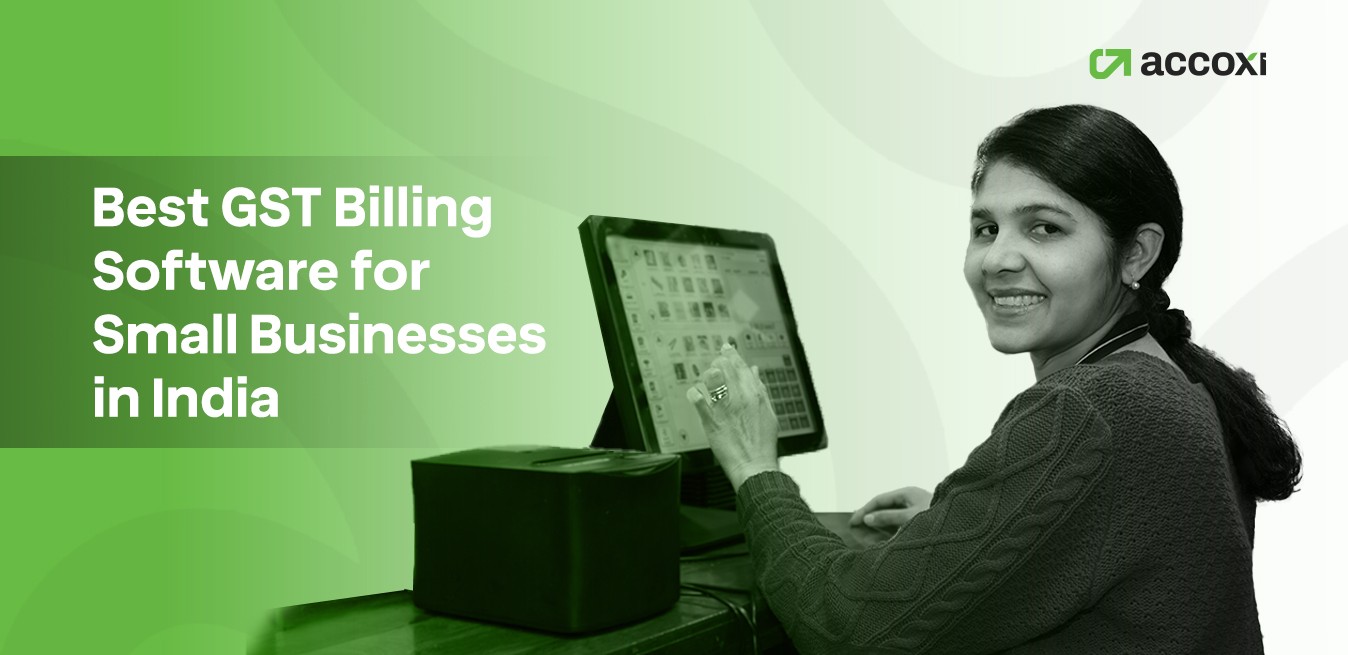
If you run a small business in India, GST compliance is not optional, it's a legal obligation. But between managing stock, serving customers, and keeping your books in order, sitting down to manually calculate taxes and file returns is genuinely painful.
That's where GST billing software comes in. The right tool doesn't just generate invoices; it handles tax calculations, e-invoicing, e-way bills, and gives you a clear picture of your finances without needing a full-time accountant.
But here's the problem: there are dozens of options out there, and most comparison articles just throw logos at you without explaining what actually matters.
This guide is different. We'll break down what features you actually need, compare the most popular options available in 2026, and help you figure out what works best for a small business like yours.
GST billing software is a digital tool that helps businesses create GST-compliant invoices, track sales and purchases, manage inventory, and file returns, all while automatically applying the correct tax rates (CGST, SGST, IGST, or UTGST) based on the transaction type.
For a small business owner, the core value is simple: it reduces manual errors, saves time, and keeps you audit-ready throughout the year.
In India, the GST framework requires specific invoice formats, HSN/SAC codes, e-invoicing for eligible businesses, and regular return filing (GSTR-1, GSTR-3B, etc.). Good billing software handles most of this automatically.
You need it if you are:
Even if your turnover is modest, having proper billing software from day one saves a massive amount of cleanup work later.
Before jumping into the comparison, here's what separates average billing tools from genuinely useful ones:
The software should auto-apply the correct tax slab based on the HSN/SAC code. You shouldn't manually select 5%, 12%, 18%, or 28% every time you raise an invoice.
As of 2026, e-invoicing is mandatory for businesses with turnover above ₹5 crore. But even if you're below that threshold, having the feature ready saves a last-minute scramble. E-way bill generation for goods movement is equally important for product-based businesses.
Being able to pull GSTR-1 and GSTR-3B summaries directly from your billing software, without manually recreating data, is a huge time saver.
For product businesses, billing and inventory should talk to each other. Every invoice raised should automatically update your stock count.
If you have an accountant or a team member who needs access, multi-user support is essential.
Small business owners are always on the move. A reliable mobile app means you can raise invoices or check reports from anywhere.
Your financial data is critical. Cloud-based software with automatic backup protects you from hardware failures and data loss.
Fancy features mean nothing if your team can't use them. Look for clean interfaces with a short learning curve.
Here's an honest look at the leading options small businesses is using in India right now.
Best for small and growing businesses that are tired of choosing between affordability and functionality. Accoxi gives Indian SMEs access to features that were once reserved for much larger companies, starting at just ₹249/month, with a free trial so you can see it in action before deciding. Take a look here.
Accoxi is a cloud-based accounting platform built specifically for Indian businesses. It covers GST billing, inventory, multi-branch management, and financial reporting in one place. What stands out is the AI-powered invoice creation; you can upload a physical bill image, and the system extracts the details automatically, which genuinely cuts down on data entry time.
It supports e-invoicing and e-way bill generation natively, making compliance less of a hassle. The interface is reasonably clean, and there's both a Windows desktop app and an Android mobile app (called Accoxi Touch), which is useful for businesses that need offline access.
For businesses with multiple locations, the branch accounting feature lets you track sales, expenses, and inventory separately while viewing consolidated reports centrally.
Pricing: Free plan available. Paid plans start at ₹249/month (Basic) and ₹849/month (Standard, billed annually). Enterprise plans are available for larger setups.
Limitations: The free plan is limited to one user, and some advanced features are only available on higher tiers.
Best for: Businesses that want a feature-rich, established desktop solution
Tally Prime is arguably the most widely used accounting software in India. It has deep GST capabilities, supports complex accounting structures, and has a massive user base which means finding trained staff or accountants familiar with it is easy.
It's a desktop-first product, though Tally on Cloud options exist. The interface is not the most modern, but it's highly reliable and handles complex GST scenarios well.
Pricing: One-time license around ₹18,000+ for a single user, with an annual subscription model also available.
Limitations: Higher upfront cost, steeper learning curve for new users, and the interface feels dated compared to newer cloud-native tools.
Best for: Businesses already using the Zoho ecosystem
Zoho Books is a polished, cloud-first accounting tool with solid GST compliance features. It integrates well with other Zoho products (CRM, Inventory, Payroll), making it a strong choice if you're already in that ecosystem.
It supports e-invoicing, GSTR reports, and has a good mobile app. The interface is modern and beginner friendly.
Pricing: Free plan for businesses with turnover under ₹25 lakh/year. Paid plans start at ₹749/month.
Limitations: Cost can be added if you need multiple Zoho add-ons. Some advanced features require higher plans.
Best for: Businesses focused heavily on GST filing and compliance
Clear started as a tax filing platform and has evolved into a broader compliance tool. It's particularly strong for GSTR filing, reconciliation, and e-invoicing. If your primary concern is staying compliant and filing on time rather than full-fledged accounting, Clear is worth considering.
Pricing: Plans vary; billing features are bundled with GST compliance packages.
Limitations: Less suited for businesses that need robust inventory management or day-to-day bookkeeping.
Best for: Very small businesses and first-time software users
Vyapar is a popular choice among micro and small business owners, particularly traders and retailers. It has a simple interface, works offline, and covers basic GST invoicing, inventory, and reports.
The best GST billing app comparison would be incomplete without Vyapar — its mobile app is one of the most downloaded business apps in India.
Pricing: Mobile apps are free with limited features. Desktop version starts at around ₹1,799/year.
Limitations: Not ideal for businesses needing multi-branch management, advanced accounting, or large-scale operations.
|
Feature |
Accoxi |
Tally Prime |
Zoho Books |
Clear |
Vyapar |
|
Cloud-based |
✔️ |
Partial |
✔️ |
✔️ |
Partial |
|
Mobile App |
✔️ |
❌ |
✔️ |
✔️ |
✔️ |
|
E-Invoicing |
✔️ |
✔️ |
✔️ |
✔️ |
✔️ |
|
E-Way Bill |
✔️ |
✔️ |
✔️ |
✔️ |
✔️ |
|
Inventory Management |
✔️ |
✔️ |
✔️ |
❌ |
✔️ |
|
Multi-Branch |
✔️ |
✔️ |
Limited |
❌ |
❌ |
|
Free Plan |
✔️ |
❌ |
✔️ |
Limited |
✔️ |
|
AI Features |
✔️ |
❌ |
Limited |
Limited |
❌ |
|
Starting Price (paid) |
₹249/mo |
₹18,000+ |
₹749/mo |
Varies |
₹1,799/yr |
There's no single "best" option; it depends on your situation. Here's a simple way to think about it:
Picking based on price alone. The cheapest option often lacks the features you'll need in six months. Factor in scalability.
Ignoring mobile access. If you're frequently out of the office, you need a good mobile app, not just a desktop-only tool.
Not checking e-invoicing readiness. Even if you're not currently required to do e-invoicing, your turnover might cross the threshold sooner than expected.
Choosing software your accountant doesn't know. If your CA uses Tally and you're on something obscure, reconciliation becomes a headache.
Skipping the free trial. Most good software offers a trial period. Use it. The "feels right" factor matters when you're using it daily.
For very early-stage businesses with low transaction volumes, free plans can work. But as your business grows, you'll likely need features like multi-user access, advanced reports, or inventory management that come with paid plans.
Vyapar and Accoxi Touch are among the most used GST billing apps on Android in India. Both support offline use to varying degrees. Accoxi Touch connects to the full cloud accounting backend, making it more powerful for businesses that need real-time sync.
Not legal, but it's a good habit. If your turnover grows and you cross the threshold, having organized records makes registration and compliance much easier.
Not entirely. It automates routine tasks, invoice generation, tax calculation, report preparation, but you'll still need an accountant for strategic advice, return filing review, and handling notices.
Retailers typically need inventory management, barcode support, and fast checkout. Accoxi, Vyapar, and Tally Prime all support retail use cases. Accoxi is worth considering if you want cloud access and branch management alongside retail billing.
Choosing the best GST billing software in India isn't about finding the most feature-packed tool, it's about finding what fits how your business works.
If you're a small business just starting out, a free or entry-level plan with solid GST invoicing and inventory support is enough to get you going. As you grow, you'll want multi-user access, branch management, and deeper reporting.
The most important thing is to start. Manually managing GST compliance in spreadsheets or paper records is a risk, not just to your time, but to your business's legal standing. Good billing software pays for itself quickly, both in time saved and errors avoided.
Take advantage of free trials, test a couple of options, and pick the one your team will use consistently.